
Jackson is the capital and the most populous city of the U.S. state of Mississippi. It is one of two seats in Hinds County; the town of Raymond is the other. It is named after President Andrew Jackson. The 2000 census recorded Jackson's population at 184,256, but according to July 1, 2006 estimates, the city's population was 176,614 and its five-county metropolitan area had a population of 529,456. The Jackson-Yazoo City combined statistical area, consisting of the Jackson metropolitan area and Yazoo City micropolitan area, has a population of 557,385, making it the 88th-largest metropolitan area in the United States.
The current slogan for the city is Jackson, Mississippi: City with Soul. The city is named after President Andrew Jackson.
Founding and antebellum period (to 1860),
The area that is now Jackson was initially referred to as Parkerville and was settled by Louis LeFleur, a French Canadian trader, along the historic Natchez Trace trade route.
The Natchez Trace, a 440-mile-long path extending from Natchez, Mississippi to Nashville, Tennessee, linked the Cumberland, Tennessee and Mississippi rivers. It was a traditional Native American trail and was later also used by early European explorers as both a trade and transit route in the late 1700s and early 1800s. Today, the trail has been commemorated by the 444-mile-long Natchez Trace Parkway, which follows the approximate path of the trace. The trail itself has a long and rich history, filled with brave explorers, dastardly outlaws and daring settlers. Parts of the original trail are still accessible.

A cypress swamp along the side of the Trace near Jackson, Mississippi. Photo by Roy Adkins
The area then became known as LeFleur's Bluff. LeFleur's Bluff was founded based on the need for a centrally located capital for the state of Mississippi. In 1821, the Mississippi General Assembly, meeting in the then-capital of Natchez, had sent Thomas Hinds (for whom Hinds County is named), James Patton, and William Lattimore to look for a site. After surveying areas north and east of Jackson, they proceeded southwest along the Pearl River until they reached LeFleur's Bluff in Hinds County. Their report to the General Assembly stated that this location had beautiful and healthful surroundings, good water, abundant timber, navigable waters, and proximity to the trading route Natchez Trace. And so, a legislative Act passed by the Assembly on November 28, 1821, authorized the location to become the permanent seat of the government of the state of Mississippi.

Andrew Jackson, 7th President of the United States and the city's namesake
Jackson is named after the seventh President of the United States, Andrew Jackson, in recognition for his victory in the Battle of New Orleans.
During the late 18th century and early 19th century, the area was traversed by the Natchez Trace, on which a trading post stood before a treaty with the Choctaw, the Treaty of Doak's Stand in 1820, formally opened the area for non-native American settlers.

The approximate areas shaded in orange and green in relation to the future U.S. states of Arkansas, Mississippi, and Oklahoma.
The Treaty of Doak's Stand (7 Stat. 210, also known as Treaty with the Choctaw) was signed on October 18, 1820 (proclaimed on January 8, 1821) between the United States and the Choctaw Indian tribe. Based on the terms of the accord, the Choctaw agreed to give up approximately one-half of their remaining Choctaw homeland.
In October 1820, Andrew Jackson and Thomas Hinds were sent as commissioners that represented the United States to conduct a treaty that would surrender a portion of Choctaw country in Mississippi. They met with tribal representatives at Doak's Stand on the Natchez Trace. They met with chiefs, mingos, and headsmen like Colonel Silas Dinsmore and Chief Pushmataha. Dinsmore was a former Choctaw agent who passport ruling in 1812 stirred a brief controversy with Jackson. Dinsmore, who was there to settle a land claim, believed the policy of the American government toward the Indian tribes was a harsh one. Jackson found out about his opinion promising a confrontation, but when Jackson found out about Dinsmore intentions Jackson paid no attendtion to him.
The convention began on October 10 with a talk by Sharp Knife, the nickname of Jackson, to more than 500 Choctaws. Pushmataha accused Jackson of deceiving them of the quality of land west of the Mississippi. Pushmataha responded to Jackson's retort with "I know the country well ... The grass is everywhere very short ... There are but few beavers, and the honey and fruit are rare things." Jackson finally resorted to threats to pressure the Choctaw to sign a treaty. He shouted "Many of your nation are already beyond the Mississippi, and others are every year removing .... If you refuse ... the nation will be destroyed." On October 18th the treaty was signed.
Article IV prepared the Choctaws to become citizens of the United States when he or she became acculturated. This article would later influence Article XIV in the 1830 Treaty of Dancing Rabbit Creek.

Pushmataha in 1824.
“ ART. IV. The boundaries hereby established between the Choctaw Indians and the United States, on this side of the Mississippi river, shall remain without alteration until the period at which said nation shall become so civilized and enlightened as to be made citizens of the United States, and Congress shall lay of a limited parcel of land for the benefit of each family or individual in the nation. ... ”
—- Treaty of Doak's Stand, 1820
The preamble begins with,
“ WHEREAS it is an important object with the President of the United States, to promote the civilization of the Choctaw Indians, by the establishment of schools amongst them; and to perpetuate them as a nation, by exchanging, for a small part of their land here, a country beyond the Mississippi River, where all, who live by hunting and will not work, may be collected and settled together. And whereas it is desirable to the state of Mississippi, to obtain a small part of the land belonging to said nation; for the mutual accommodation of the parties, and for securing the happiness and protection of the whole Choctaw nation, as well as preserving that harmony and friendship which so happily subsists between them and the United States, James Monroe, President of the United States of America, by Andrew Jackson, of the State of Tennessee, Major General in the Army of the United States, and General Thomas Hinds, of the State of Mississippi, Commissioners Plenipotentiary of the United States, on the one part, and the Mingoes, Head Men, and Warriors, of the Choctaw nation, in full Council assembled, on the other part,: have freely and voluntarily entered into the following articles, viz ... ”
—-Treaty of Doak's Stand, 1820
The terms of the treaty were:
1. Choctaw land (in Mississippi) ceded to the U.S.
2. Boundary of western land (in Arkansas) ceded to the Choctaw nation.
3. Marking of boundaries by Choctaw appointed guide.
4. Boundaries may not change until the Choctaws are civilized and enlightened so as to become citizens of the United States.
5. Corn, Blankets, kettles, rifle guns, bullet moulds & nippers, and ammunition given to Choctaws, who moved from ceded territory to lands west of the Mississippi River (Oklahoma), for one year.
6. U.S. agent appointed, goods and supplies to be sent, and a blacksmith will be appointed to Choctaws in ceded lands. Property of removed Choctaws to be sent to them.
7. Selling of Choctaw lands to support Choctaw schools on both sides of the Mississippi River.
8. Annuity of $6000 US annually for 16 years for discontented Choctaws.
Jackson was originally planned, in April 1822, by Peter Van Dorn in a "checkerboard" pattern advocated by Thomas Jefferson, in which city blocks alternated with parks and other open spaces, giving the appearance of a checkerboard. This plan has not lasted to the present day.
The state legislature first met in Jackson on December 23, 1822.
In 1839, Jackson was the site of the passage of the first state law that permitted married women to own and administer their own property.
Jackson was first linked with other cities by rail in 1840. An 1844 map shows Jackson linked by an east-west rail line running between Vicksburg, Raymond, and Brandon. Unlike Vicksburg, Greenville, and Natchez, Jackson is not located on the Mississippi River, and did not develop like those cities from river commerce. Instead, railroads would later spark growth of the city in the decades after the American Civil War.
American Civil War and late nineteenth century (1861-1900)
Despite its small population, during the Civil War, Jackson became a strategic center of manufacturing for the Confederate States of America. In 1863, during the campaign which ended in the capture of Vicksburg, Union forces captured Jackson during two battles—once before the fall of Vicksburg and once after the fall of Vicksburg.

September 1863 map of the Siege of Jackson.
On May 13, 1863, Union forces won the first Battle of Jackson, forcing Confederate forces to flee northward towards Canton. On May 15, Union troops under the command of William Tecumseh Sherman burned and looted key facilities in Jackson, a strategic manufacturing and railroad center for the Confederacy. After driving the Confederate forces out of Jackson, Union forces turned west once again and engaged the Vicksburg defenders at the Battle of Champion Hill in nearby Edwards. The siege of Vicksburg began soon after the Union victory at Champion Hill. Confederate forces began to reassemble in Jackson in preparation for an attempt to break through the Union lines surrounding Vicksburg and end the siege there. The Confederate forces in Jackson built defensive fortifications encircling the city while preparing to march west to Vicksburg.
Confederate forces marched out of Jackson to break the siege of Vicksburg in early July 1863. However, unknown to them, Vicksburg had already surrendered on July 4, 1863. General Ulysses S. Grant dispatched General Sherman to meet the Confederate forces heading west from Jackson. Upon learning that Vicksburg had already surrendered, the Confederates retreated back into Jackson, thus beginning the Siege of Jackson, which lasted for approximately one week. Union forces encircled the city and began an artillery bombardment. One of the Union artillery emplacements still remains intact on the grounds of the University of Mississippi Medical Center in Jackson. Another Federal position is still intact on the campus of Millsaps College. One of the Confederate Generals defending Jackson was former United States Vice President John C. Breckenridge. On July 16, 1863, Confederate forces slipped out of Jackson during the night and retreated across the Pearl River. Union forces completely burned the city after its capture this second time, and the city earned the nickname "Chimneyville" because only the chimneys of houses were left standing. The northern line of Confederate defenses in Jackson during the siege was located along a road near downtown Jackson, now known as Fortification Street.
Today there are few antebellum structures left standing in Jackson. One surviving structure is the Governor's Mansion, built in 1842, which served as Sherman's headquarters.
The Mississippi Governor's Mansion is a historic U.S. residence in Jackson, Mississippi.

It is located at 316 East Capitol Street.
It is the second oldest executive residence in the United States that has been continuously occupied as a gubernatorial residence.
On November 25, 1969, it was added to the U.S. National Register of Historic Places.

Mississippi Governor's Mansion on June 1, 1936.
It was designated a National Historic Landmark by the U.S. Department of Interior in 1975, making it at that time one of only two state gubernatorial residences to have received this honor.
It was declared a National Historic Landmark in 1975.
The Mississippi legislature appropriated funds In January 1833 to build a capitol building and a suitable house for the Governor. Delayed by a major depression caused by the Panic of 1837, construction of the Governor's Mansion didn't begin until 1839. Governor Tilghman Tucker and his family moved into the Mansion, which had been constructed for a cost of approximately $50,000.00, in January 1842. The Governor's Mansion was designed by architect William Nichols (1780-1853), a native of Bath, England. Nichols also designed the Mississippi Capitol building and the Lyceum building located at the University of Mississippi. Nichols designed the Mansion in the period's most popular architectural style: Greek Revival. Architectural historians consider the Mississippi Governor's Mansion to be one of the finest surviving examples of the Greek Revival style in the United States.
Old Mississippi State Capitol illustration from 1875
Another is the Old Capitol building, which served as the home of the Mississippi state legislature from 1839 to 1903. There the Mississippi legislature passed the ordinance of secession from the Union on January 9, 1861, becoming the second state to secede from the United States.

Old State Capitol in 1972
Originally called the State House, the Old Mississippi State Capitol, also known as Old Capitol Museum or Old State Capitol, is the former capitol building for the Mississippi state legislature from 1839 until 1903. It is currently a museum of Mississippi history. The building is a Mississippi State Historic Site and a National Historic Landmark. It was declared a National Historic Landmark in 1990.
The first state house, a small brick building, was erected on the northeast corner of Capitol and President Streets and was in use from 1822 until the new-at-the-time capitol building was first used in 1839.
The Old Mississippi State Capitol served as the Capitol Building from 1839 until its replacement in 1903 by the current capitol building. It currently serves as a museum, containing exhibits from all periods of Mississippi's history.
Construction was begun in 1833, but there were difficulties with the architect and some of the materials proved defective. The work was halted, some of it was torn down, and a new architect, William Nichols, was employed. Although the Capitol was not completed until 1840, the Legislature first met in the unfinished building in 1839.
The Old Capitol is a masterpiece of nineteenth-century Greek Revival architecture. It was the third and final statehouse designed by the influential British architect William Nichols. The Old Capitol is Jackson’s oldest building. The imposing structure was situated at the main intersection of the young city, standing at the head of Jackson's Capitol Street, and soon became its dominant feature. The building itself is defined by its rotunda, which rises ninety-four feet from the polished limestone floor to the top of the dome.
The Old Capitol was designed as the architectural expression of the 1832 Mississippi constitution, which articulated Jacksonian democracy’s ideal of broad public participation in government. Consequently, the legislative chambers eclipsed the governor's office in elegance and location, and the public was provided large, open galleries in both the House and Senate chambers to view the proceedings.
Events

Old Mississippi State Capitol Senate chamber Photo by Chuck Kelly

Old Mississippi State Capitol rotunda. Photo by Chuck Kelly
Many historic events occurred in the old Capitol.
1839 saw the passage of the first law in America giving property rights to married women.
Events honoring Andrew Jackson during his last visit to the city named for him occurred in 1840.
Henry Clay was received there in 1844.
In 1847, Jefferson Davis and the Mississippi Volunteers gathered here on their victorious return from the Mexican-American War.
In the House of Representatives on January 9, 1861, Mississippi became an independent republic and the second state to secede.
The first constitutional convention in the South after the fall of the Confederacy was held here in 1865.
Also in 1865 the building was the location of the passage of Mississippi's "Black Codes," legislation restricting the movement and actions of free blacks in the state. The passage of the codes doomed President Lincoln's moderate Reconstruction policies in Mississippi and in other southern states and led to the passage of both the first federal civil rights law, the Civil Rights Act of 1866, and the Fourteenth Amendment to the United States Constitution.
In 1870 the building became the location of the election of Hiram Rhodes Revels to the United States Senate, making him the first African American to serve in Congress and marked the beginning of active black participation in the federal legislature.
The last address by Jefferson Davis to the legislature was done in 1884.
In 1884, the first state-supported college for women in America was established there.
In 1890 the Constitution, under which Mississippi is still governed, was adopted there.
The inauguration of Governor William F. Winter was held there in 1980.
Presentation of the French Legion of Honor Award to writer Eudora Welty was done there in 1996.
In 1997, the "old" Capitol saw the signing of a Historic Accord between the State of Mississippi and the Mississippi Band of Choctaw Indians.
Vacancy and renovation

Old Mississippi State Capitol; February 20, 1940
The Old Capitol was virtually abandoned from 1903 to 1916. As the Old Capitol deteriorated from neglect, attempts were made to demolish it. Through the efforts of women's preservation groups, the building was saved from destruction and was turned into a state office building in 1917. Several state agencies including the Board of Health, the Department of Education, and the Department of Agriculture once called the Old Capitol Office Building home.
The Old Capitol was originally constructed with a limestone base and a faux-limestone facade of scored stucco on three sides, with brick left exposed only at the back of the building—which faced what was then the wild Pearl River swamp.
During the administration of Governor J. P. Coleman (1956-1960), a major restoration of the Old Capitol was begun. The Department of Archives and History directed its renovation into a state museum and showplace for Mississippi History. Construction began February 6, 1959 with the State Historical Museum being dedicated on June 3, 1961. The cost of the restoration was approximately 2 million dollars. The faux-limestone stucco was left off as a cost-cutting measure.
Damage from Hurricane Katrina,
In August 2005, Hurricane Katrina roared into Mississippi. The copper roof of the Old Capitol was peeled back by the storm’s winds and rain was driven in, badly damaging both building and artifacts. Collection storage areas were the worst hit. There was nowhere to move those artifacts except areas open to the public, forcing the museum to close immediately.
Meanwhile, the saturated insulation and wet plaster gave rise to severe mold and mildew problems. Staff members stayed in the building to coordinate the removal of all artifacts, and then were relocated into temporary offices.
With the Old Capitol closed, the plan to build a new Museum of Mississippi History first and restore the Old Capitol afterwards was no longer viable. The 2006 Legislature responded and fully funded the restoration of the Old Capitol. Work on the site began in January 2007, and the museum is scheduled to open to the public in January 2009.
As part of the post-Hurricane Katrina renovation, the scored faux-limestone stucco is being replaced, with the first test application done on May 23, 2008.
An iron fence that was removed during an earlier renovation has been replicated and installed. A large three-part gate is centered in front of the building, with two smaller gates flanking it. Like the original, the fence features two lanterns and six eagles atop the gateposts.
Inside, the Governor’s Office, Senate and High Court Chambers, and State Library will be restored to their nineteenth-century appearances. The renovated House of Representatives chamber will continue to be used for special programs and events. Other exhibits will tell the story of Jackson as the capital city, the Old Capitol’s use in the twentieth century, and the importance of historic preservation.
Along with the William F. Winter Archives and History Building, the Charlotte Capers Archives and History Building, the War Memorial, and the new Museum of Mississippi History, the restored Old Capitol will form the core of the state’s history center, drawing thousands of visitors and serving as a gateway to heritage tourism across Mississippi.
In 1875 the Red Shirts were formed, one of a second wave of insurgent paramilitary organizations that essentially operated as "the military arm of the Democratic Party" to take back political power from the Republicans and to drive blacks from the polls. Democrats regained control of the state legislature in 1876. The constitutional convention of 1890, which produced Mississippi's Constitution of 1890, was also held at the capitol. This was the first of new constitutions or amendments ratified in southern states through 1908 that effectively disfranchised African Americans and poor whites, through provisions making voter registration more difficult: such as poll taxes, residency requirements, and literacy tests. These provisions survived a Supreme Court challenge in 1898. As 20th century Supreme Court decisions began to find such provisions unconstitutional, Mississippi and other southern states rapidly devised new methods to continue disfranchisement of most blacks.

The so-called New Capitol replaced the older structure upon its completion in 1903, and today the Old Capitol is a historical museum. A third important surviving antebellum structure is the Jackson City Hall, built in 1846 for less than $8,000. It is said that Sherman, a Mason, spared it because it housed a Masonic Lodge, though a more likely reason is that it housed an army hospital.

Mississippi State New Capitol Building main floor looking up

Mississippi State New Capitol Building, second floor looking foward

Mississippi New State Capitol Building Rotunda
Early twentieth century (1901-1960)
April 16, 1921 flood on Town Creek tributary stream at Jackson, Mississippi shown flowed onto Capitol Street.

The photo is a view of East Capitol Street looking east from North Farish Street.

Eudora Welty (1909-2001), award-winning American author and photographer.
Pulitzer Prize-winning author Eudora Welty was born in Jackson in 1909, lived most of her life in the Belhaven section of the city, and died there in 2001. Her memoir of development as a writer, One Writer's Beginnings (1984), presented a charming picture of the city in the early 20th century. The main Jackson Public Library was named in her honor.
Highly acclaimed African-American author Richard Wright, a native of Roxie, Mississippi, lived in Jackson as an adolescent and young man in the 1910s and 1920s. He related his experience in his memoir Black Boy (1945). He described the harsh and largely terror-filled life poor African-Americans experienced in the South and northern ghettos under segregation in the early twentieth century.

Black Boy Cover
Black Boy (1945) is an autobiography by Richard Wright. Depicting Wright's life in great detail, the book tells the story of his troubled youth and race relations in the South.
Plot summary,
Richard Wright described himself as a loser growing up in Mississippi with family members who embraced religion. A few of the most disturbing aspects of his early childhood included him accidentally burning down his home, and hanging a stray kitten that his father carelessly instructed him to kill— this, however, was not to be taken literally; Richard's father just wanted the kitten to be quiet so that he could go back to sleep. Richard's hatred for his father led him to take a more literal interpretation of the command in order to defy him. His plan backfired when his mother and brother instilled in him guilt; his mother instructed him to take down the stiff kitten and give it a proper burial.
Young Richard's father ended up leaving the family for another woman, further aggravating Richard's hatred for him. Even when Richard's mother was struggling and battling sickness to support him and his brother, he refused to live with his father and new wife, who offered a more comfortable living situation, on principle. He described his father as a simple man who had allowed himself to be mentally enslaved; pity was another potent emotion that Richard expressed regarding his father.
When his mother became too ill to work, the family went to live with Richard's grandmother. While at first the Seventh-day Adventist woman was happy to see her daughter and grandchildren, and food was more plentiful than it had been before, conditions later changed and Richard found himself drinking water all day to avoid hunger pangs. He knew that he had to start working at a young age in order to be independent, but this conflicted with his grandmother's religious views. Richard's obvious disinterest in church later convinced her that he was a lost soul and she reluctantly allowed him to get a job. His lack of religious commitment was noticeable not only to his grandmother but to other relatives who came to live with them during hard times. His aunt and grandmother marked him "dead" because of his agnosticism. During these trying times, his sick mother became his only ally. His brother was taken in by relatives as it became clear that Richard's mother had health issues that were not improving.
Wright experienced sporadic schooling throughout his young life due to the constant moving that his family did to try to avoid constantly looming poverty. He soon realized that with the proper reading materials he could teach himself. Various demeaning jobs, one of which involved him delivering racist newspapers to the colored community, and family alienation, accelerated his escape into horror and mystery short stories and novels. He said that as a youth he "could not read enough of them." This sparked Wright's interest in defining his experience, through writing, as a poor black boy in a southern state, experiencing racial tension. He started writing his own short stories that frightened his simplistic grandmother who could not understand why her grandson was interested in writing about mystery and horror. Edgar Allan Poe was very influential to Wright when he started to balance his avid reading with some writing of his own.
Richard was a fast learner and even though he was not able to go to school the required number of years, he was selected as class valedictorian of his junior high class because of his ability and intelligence. The principal even chose him to read a speech to the graduating class. Richard agreed, and wrote a speech for the occasion. When the principal handed Richard a speech that he had written for him to recite at graduation, Wright refused due to his decision not to read a degrading speech created by the principal, and delivered his own. Through menial jobs, Wright was eventually able to support his gravely ill mother and his little brother.
Dreams of moving north to escape debilitating conditions in the south enticed Wright, so he took a risky first step. With raggedy clothing and few belongings, he left Jackson for a stint in Memphis, just north of the Tennessee-Mississippi border. Knocking at the first inviting residence he arrived at in Memphis, he was disappointed to find that slave mentality and religious devotion were not confined to small Mississippi towns. The mother and daughter he briefly moved in with immediately assumed that he was religious, and right away wanted him (a complete stranger) to stay indefinitely, and marry the young daughter who Wright pitied, as he did his own father, for her simplicity: he was an unknown, poor boy from Mississippi who just wanted a place to lay his head until he could save enough money to move North in earnest, and a mother and daughter—knowing nothing about him—shallowly conclude that he was good enough to keep, permanently. It was a critical time for Richard as it marked quite a few beginning and endings in his life: his idealistic view of urban life was crumbling in the face of the simplistic family he moved in with and his disillusionment with the American dream began (Wright later moved to Paris, France). This disillusionment would be further explored during Wright's experiences with the Communist Party in American Hunger. However, it marked the beginning of his writing career in Chicago and independence from a hostile family.
Jackson's economic growth was stimulated in the 1930s by the discovery of natural gas fields nearby.
During World War II, Hawkins Field in northwest Jackson became a major airbase. Among other facilities and units, the Royal Netherlands Military Flying School was established there, after Nazi Germany occupied the Netherlands. From 1941, the base trained all Dutch military aircrews.
Civil Rights Movement in Jackson,
Since 1960, Jackson has undergone a series of dramatic changes and growth. As the state capital, it became a site for civil rights activism that was heightened by mass demonstrations during the 1960s. On May 24, 1961, during the African-American Civil Rights Movement, more than 300 Freedom Riders were arrested in Jackson for disturbing the peace after they disembarked from their bus. They were riding the bus to demonstrate against segregation on public transportation. Although the Freedom Riders had intended New Orleans, Louisiana as their final destination, Jackson was the farthest that any of them managed to travel.
Efforts to desegregate Jackson facilities began before the Freedom Rides when nine Tougaloo students were arrested for attempting to read books in the "white only" public library. Founded as a historically black college (HBCU) by the American Missionary Movement after the Civil War, Tougaloo College brought both black and white students together to work for civil rights. It also created partnerships with neighboring mostly white Millsaps College to work with student activists. It has been recognized as a site on the Civil Rights Trail by the National Park Service. After the Freedom Rides, students and activists of the Freedom Movement launched a series of merchant boycotts, sit-ins and protest marches, from 1961 to 1963.
In Jackson, shortly after midnight on June 12, 1963, Medgar Evers, civil rights activist and leader of the Mississippi chapter of the NAACP, was murdered by Byron De La Beckwith, a white supremacist. Thousands marched in his funeral procession to protest the assassination. In 1994, prosecutors Ed Peters and Bobby DeLaughter finally obtained a murder conviction of De La Beckwith. A portion of U.S. Highway 49, all of Delta Drive and Jackson-Evers International Airport was named in honor of Medgar Evers. During 1963 and 1964, organizers did voter education and voter registration. In a pilot project, they rapidly registered 80,000 voters across the state, demonstrating the desire of African Americans to vote. In 1964 they created the Mississippi Freedom Democratic Party as an alternative to the all-white state party, and sent an alternate slate of candidates to the national party convention.
Mississippi continued segregation and the disfranchisement of most African Americans until after the Civil Rights Movement gained passage of the Civil Rights Act of 1964 and Voting Rights Acts of 1965. In June 1966, Jackson was also the terminus of the James Meredith March, organized by James Meredith, the first African-American to enroll at the University of Mississippi. The march, which began in Memphis, Tennessee, was an attempt to garner support for implementation of civil rights legislation. It was accompanied by a new drive to register African-Americans to vote in Mississippi. In this latter aim, it succeeded in registering between 2,500 and 3,000 black Mississippians to vote. The march ended on June 26 after Meredith, who had been wounded by a sniper's bullet earlier on the march, addressed a large rally of some 15,000 people in Jackson.

James H. Meredith (born June 25, 1933) is an American civil rights movement figure. He was the first African-American student at the University of Mississippi, an event that was a flash point in the American civil rights movement.
Meredith was born in Kosciusko, Mississippi of Native American (Choctaw) and African American heritage. He enlisted in the United States Air Force right out of high school and served from 1951 to 1960. He then attended Jackson State College for two years. He applied to the University of Mississippi, but was denied twice.
On October 1, 1962, he became the first black student at the University of Mississippi, after being barred from entering on September 20. His enrollment, virulently opposed by segregationist Governor Ross Barnett, sparked riots on the Oxford campus, which required federal troops and U.S. Marshals, who were sent by President John F. Kennedy. The riots led to a violent clash which left two people dead, including French journalist Paul Guihard, 48 soldiers injured and 30 U.S. Marshals with gun wounds. Barnett was fined $10,000 and sentenced to jail for contempt, but the charges were later dismissed by the 5th Circuit Court of Appeals. Bob Dylan sang about the incident in his song Oxford Town. Meredith's actions are regarded as a pivotal moment in the history of civil rights in the United States. He graduated on August 18, 1963 with a degree in political science.
In September 1967 the Ku Klux Klan bombed the synagogue building of the Beth Israel Congregation in Jackson, and in November bombed the house of its rabbi, Dr. Perry Nussbaum.
Gradually the old barriers came down. Since then, both whites and African Americans in the state have had a high rate of voter registration and turnout.
Recent History
The first successful cadaveric lung transplant was performed at the University of Mississippi Medical Center in Jackson in June 1963 by Dr. James Hardy. Hardy transplanted the cadaveric lung into a patient suffering from lung cancer. The patient survived for eighteen days before dying of kidney failure.

Malaco Logo
Since 1968, Jackson has been the home of Malaco Records, one of the leading record companies for gospel and soul music in the United States. In January 1973, Paul Simon recorded the song "Learn How To Fall", found on the album There Goes Rhymin' Simon, in Jackson at the Malaco Recording Studios.

On May 15, 1970 police killed two students and wounded 12 at Jackson State University (then called Jackson State College) after a protest of the Vietnam War included overturning and burning some cars. These killings occurred ten days after the National Guard killed four students in an anti-war protest at Kent State University in Ohio, and were part of national social unrest. Newsweek cited the Jackson State killings in its issue of 18 May when it suggested that U.S. President Richard Nixon faced a new home front.
In 1997, Harvey Johnson, Jr. became the city's first African-American mayor. During his term, he proposed the creation of a convention center, in hopes of attracting business to the city. This effort was not successful during his tenure but his idea did became a reality later when the voters of Jackson overwhelmingly passed a referendum for a tax to build the Convention Center. As a result of this vote, many new development projects are underway in Downtown Jackson.
Mayor Johnson was replaced by Frank Melton on July 4, 2005. Melton has subsequently generated controversy through his unconventional behavior, which has included acting as a law enforcement officer. A dramatic spike in crime has also ensued, despite Melton's efforts to reduce crime. The lack of jobs has contributed to crime.
2007 saw a historic first for Mississippi as Hinds County sheriff Malcolm McMillin was appointed as the new police chief in Jackson. McMillin is now both the county sheriff and city police chief.
Air Travel,
Jackson is served by Jackson-Evers International Airport, located at Allen C. Thompson Field, east of the city in Flowood in Rankin County. Its IATA code is JAN. The airport has non-stop service to 12 cities throughout the United States and is served by 6 scheduled carriers (American, Delta, Continental, Southwest, Northwest, and US Airways)

On 22 December 2004, Jackson City Council members voted 6-0 to rename Jackson International Airport in honor of slain civil rights leader and field secretary for the Mississippi chapter of the NAACP, Medgar Evers. This decision took effect on 22 January 2005.
Formerly Jackson was served by Hawkins Field Airport, located in northwest Jackson, with IATA code HKS, which is now used for private air traffic only.
Underway is the Airport Parkway project. The environmental impact study is complete and final plans are drawn and awaiting Mississippi Department of Transportation approval. Right-of-way acquisition is underway at an estimated cost of $19 million. The Airport Parkway will connect High Street in downtown Jackson to Mississippi Highway 475 in Flowood at Jackson-Evers International Airport. The Airport Parkway Commission consists of the Mayor of Pearl, the Mayor of Flowood, and the Mayor of Jackson, as the Airport Parkway will run through and have access from each of these three cities.
Railroads,

Jackson is served by the Canadian National Railway (formerly the Illinois Central Railroad).

The Kansas City Southern Railway also serves the city. The Canadian National has a medium-sized yard downtown which Mill Street parallels and the Kansas City Southern has a large classification yard in Richland.

Amtrak, the national passenger rail system, provides service to Jackson. The Amtrak station is located at 300 West Capitol Street. Amtrak's southbound City of New Orleans provides service from Jackson to New Orleans and some points between. The northbound City of New Orleans provides service from Jackson to Memphis, Carbondale, Champaign-Urbana, Chicago and some points between.

Efforts to establish service with another Amtrak train, the Crescent Star, an extension of the Crescent westward from Meridian, Mississippi to Dallas, Texas, failed in 2003.
Industry,
Jackson is home to several major industries. These include electrical equipment and machinery, processed food, and primary and fabricated metal products. The surrounding area supports agricultural development of livestock, soybeans, cotton, and poultry.
Publicly traded companies,
The following companies are headquartered in Jackson:
Cal-Maine Foods, Inc. (NASDAQ:CALM)
EastGroup Properties Inc. (NYSE:EGP)
Parkway Properties, Inc. (NYSE:PKY)
Trustmark Corporation (NASDAQ:TRMK)
Cultural organizations and institutions

Jackson, Mississippi city hall

Ballet Mississippi

Celtic Heritage Society of Mississippi

International Museum of Muslim Cultures
Jackson State University Botanical Garden

Jackson Zoo

Mississippi Agriculture and Forestry Museum
Mississippi Arts Center
Mississippi Chorus

Mississippi Department of Archives and History, which contains the state archives and records.

Mississippi Heritage Trust

Mississippi Hispanic Association
Mississippi Immigrants Rights Alliance

Mississippi Museum of Art

Mississippi Opera

Mississippi Symphony Orchestra (MSO), formerly the Jackson Symphony Orchestra, founded in 1944
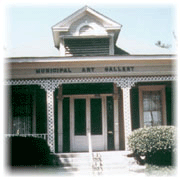
Municipal Art Gallery

Mynelle Gardens

New Stage Theatre

Russell C. Davis Planetarium

Smith-Robertson Museum and Cultural Center
Colleges and universities:
Tougaloo College (1869)
Jackson State University (1877)
Belhaven College (1883)
Millsaps College (1890)
Hinds Community College's campuses in Jackson are the Nursing/Allied Health Center and the Academic/Technical Center
Mississippi College School of Law (1930)
University of Mississippi Medical Center (1955), health sciences campus of the University of Mississippi
Reformed Theological Seminary
Wesley Biblical Seminary
Tourism and Culture
Jackson is a city famous for its music - including Gospel, Blues, and R&B. Jackson is also home to the world famous Malaco Records recording studio. Many notable musicians hail from Jackson.
Rap rocker Kid Rock made a song about Jackson, aptly titled "Jackson, Mississippi", in 2003.
"Jackson" is a song written by Jerry Leiber and Billy Edd Wheeler about a married couple who find that the "fire" has gone out of their relationship. The song relates the desire of the husband and wife to travel to Jackson, Mississippi, where they each look forward to a new life free of the unhappy relationship. Famous covers of the song include the 1968 Grammy Award winner by Johnny Cash and June Carter Cash. The song was performed by Joaquin Phoenix and Reese Witherspoon (playing Johnny Cash and June Carter) in the 2005 film Walk the Line.
Jackson is home to the USA International Ballet Competition. Founded in 1978 by Thalia Mara, the first USA International Ballet Competition took place in 1979 and joined the ranks of Varna, Bulgaria (1964); Moscow, Russia (1969); and Tokyo, Japan (1976). The International Ballet Competition (IBC) originated in Varna, Bulgaria in 1964. The competition eventually expanded to rotating annual events in Varna, Moscow and Tokyo. In 1979 the event first came to the United States in Jackson, Mississippi, where it now returns every four years. The rotation is currently among Jackson, Varna, Helsinki, Finland, and Shanghai, China. These first competitions were given sanction by the International Dance Committee of UNESCO’s International Theater Institute. Today, international ballet competitions flourish worldwide, and the USA IBC in Jackson remains one of the oldest and most respected competitions in the world. In 1982, the United States Congress passed a Joint Resolution designating Jackson as the official home of the USA International Ballet Competition. Jackson held subsequent competitions in 1982, 1986, 1990, 1994, 1998, 2002 and 2006. The next competition is in 2010. The competitions are held at Thalia Mara Hall.[27]
Periodic cultural events:
CelticFest Mississippi (annual, September)
Crossroads Film Festival (annual, April)
Festival Latino (annual, September)
Jubilee!Jam (annual, June)
Mal's St. Pattys Day Parade (annual, on the Saturday of or after March 17, the fourth largest in the nation with over 50,000 people)
Mississippi State Fair (annual, held in October)
OUToberfest (annual gay and lesbian festival, October)
USA International Ballet Competition (every four years, June)
Museums and Historic Sites:
Eudora Welty House Museum
Greenwood Cemetery
The International Museum of Muslim Cultures
The City of Jackson Fire Museum
King Edward Hotel
Manship House Museum
Medgar Evers Home Museum
Mississippi Agriculture and Forestry Museum
Mississippi Governor's Mansion
Mississippi Museum of Art
Mississippi Museum of Natural Science
Mississippi Sports Hall of Fame and Museum
The Oaks House Museum/Boyd House
Old Capitol Museum of Mississippi History
Smith Robertson Museum and Cultural Center
Standard Life Insurance Building


